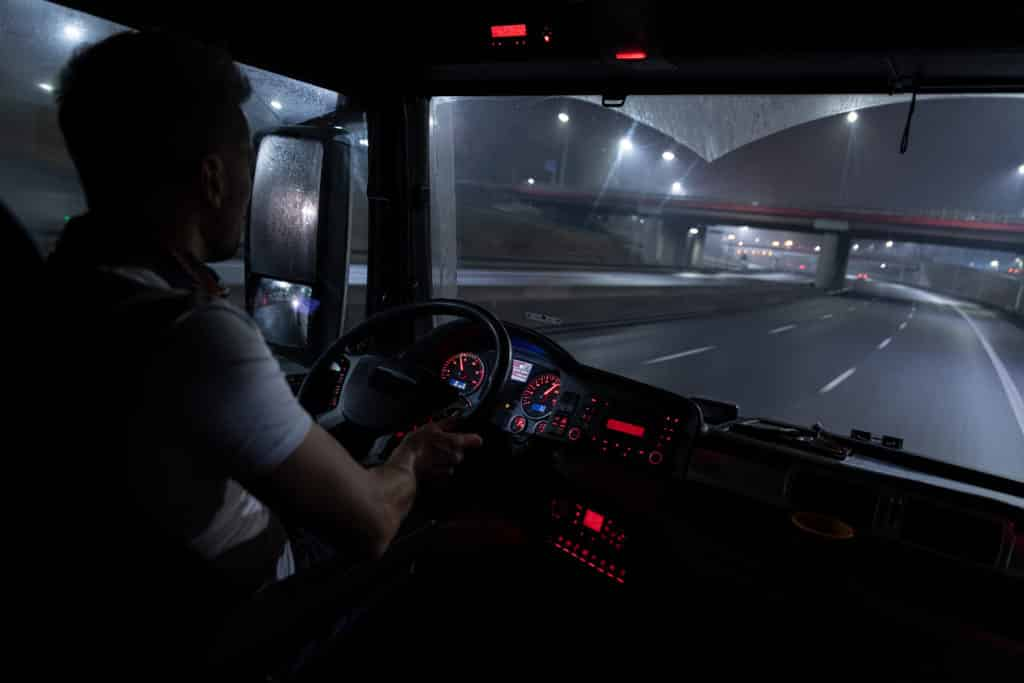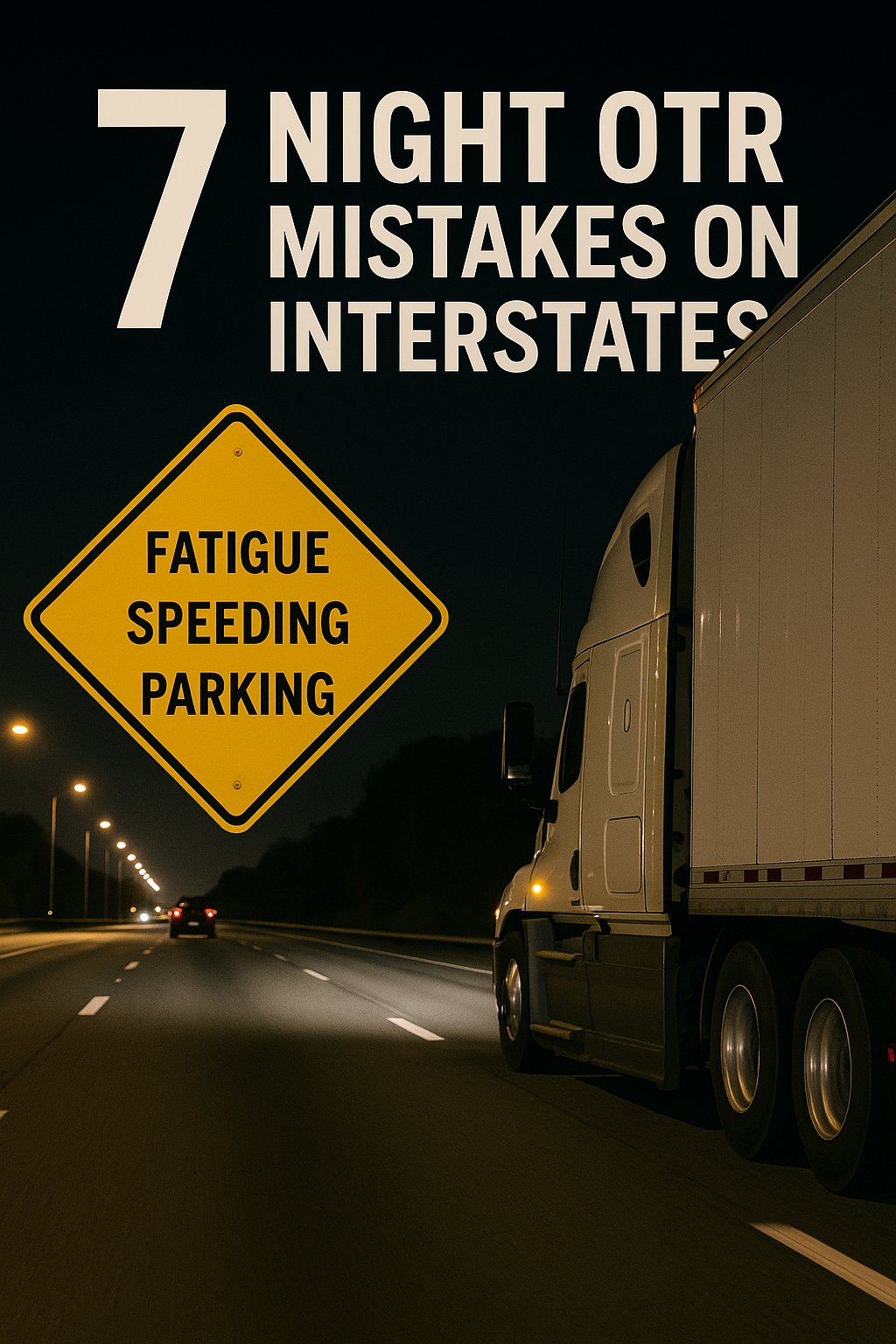
Night-time travel on interstate roads has turned into a part of daily life for many OTR truck drivers. Trucks keep moving, drivers are given less delivery time, and highways are often seen to be less busy after the sun goes down. For the longstanding truck drivers, night driving resembles efficiency and predictability. Rookies, on the other hand, usually perceive it as a means to cover more miles in a shorter time. Nonetheless, driving on interstates at night puts drivers at higher risk for practicing the most common and costly mistakes they make in commercial trucking.
The majority of the commercial trucking accidents that happen at night do not only happen because of extreme weather or bad roads. They are the result of human decisions: driving under the influence of exhaustion, speeding to “make time,” parking in unsafe or illegal locations, or underestimating blind spots and distracted driving. Over the last few decades, the transportation sector has expanded the number of trucks on the road. These errors seem trivial at the moment but quickly become serious mistakes at high speeds.
This article describes seven most frequently made mistakes by truck drivers during night trips on the interstates, the reasons they happen, and what OTR drivers can do to decrease the threat. The term should not bring about fear, but rather ear – knowledge of the cause. Drivers’ safety at night is less of luck and more of discipline.
Not Correcting the Fatique Levels When Driving at Night
Lack of knowledge about fatigue is the greatest underestimated risk in interstate driving at night. Many OTR truck drivers have the impression that if they do not sleep, they are good to go on the road. What they do not know is that fatigue is not only about falling asleep. According to research on traffic accidents, approximately 20 % of all traffic crashes worldwide are related to driving while fatigued, and fatigue significantly increases the chances of errors and collisions. ScienceDirect It is about having a slower reaction time, making poor decisions, and not being able to focus on the things that matter, which are micro-errors that we do not recognize until it is too late.
Drowsy driving is especially risky on interstates because the feeling of boredom is constantly present. Long straight stretches of road, constant speed, and little effort needed for steering create a false sense of control. The driver’s brain literally turns off while the truck travels at a speed of 65 mph.
Drowsy Driving for Truckers – Tips to Stay Awake for Long Distances + Warning Signs and Symptoms!!!
Some common signals of OTR drivers’ mistakes caused by fatigue include:
- Erroneous exits or signs of traffic
- Braking late
- Excessive steering adjustments
- Failure to remain in the lane
- High tendency of being irritable or showing aggressive driving behavior
New truck drivers’ errors mostly consist of not being responsive to the body’s early signs of fatigue. For example, they would say: “The road is clear.” Unfortunately, most of the accidents arising from fatigue occur when drivers believe that they still have control over the truck.
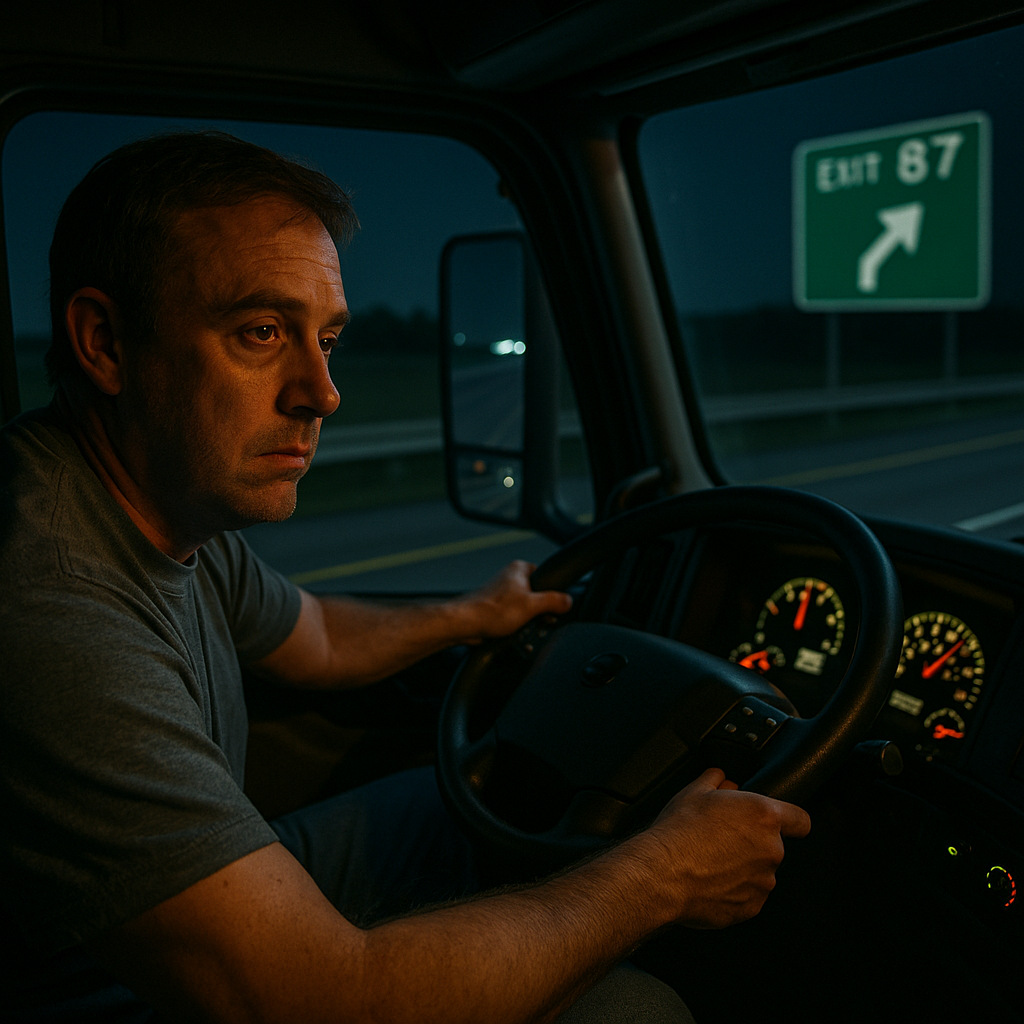
Speeding Because Roads Are Deserted
One of the truckers’ most common mistakes is speeding at night. The roads look wide and free of traffic, there are fewer cars and police feel more remote. This gives drivers a psychological license to drive faster “just a little.”
At night, speeding multiplies risk because:
- Visibility distance is reduced
- Wildlife crossings increase
- Construction zones are harder to detect
- Reaction time is already impaired by fatigue
Truck Driving at Night: ESSENTIAL TIPS
Speeding also results in narrowing the margin for error on blind spots and merging vehicles. A car that is entering the interstate may not be able to judge the truck’s speed correctly, especially if the truck is exceeding the mentioned limits.
From a safety standpoint, speeding negates the benefit night driving is supposed to bring: less traffic. From a legal standpoint, night-hour speeding violations are punished severely in accidents involving commercial trucks.
Making Wrong Parking Choices at the End of a Night Run
Parking is often the most overlooked mistake that OTR drivers make when driving at night on interstates. After being in darkness for several hours, the fatigue truly pushes the drivers to drive wherever they want – without stopping anywhere first. This is where the largest number of preventable cases happen.
Unsafe night parking can often include:
- Entrance or exit ramps
- Narrow shoulders
- Unauthorized rest areas
- Dark industrial zones with no lighting
- Improvised roadside pull-offs
Improper parking is an issue that occurs due to drivers being more likely to have backing accidents, sideswipes, and some other issues as the car winds up in a position not expected under bright conditions. Besides, tunneled vision drivers are more likely to hit stationary vehicles in dark areas.
Hardcore OTR drivers make a plan for parking site before the fatigue kicks in. New truckers’ errors usually include waiting too long, assuming a spot will “work out.”
Skipping Pre-Trip and Mid-Shift Inspections at Night
Discipline in mistakenly pre-trip logistics and deliveries often goes off the tracks during night driving. The vision defects will only make it more difficult to see the truck components, and the driver will be in a hurry. These are big mistakes.
Commonly overlooked pre-trip inspections during the night encompass:
- RIP and throw
- Semitrailer brakes
- Each tire’s pressure
- Fastening securement problems
- Visibility of the air line
Night interstate driving heavily depends on visibility, both in what you see and how well other drivers see you. Breakdowns in the lighting of a vehicle increase the chances of rear-end collisions and side-swipe changes.
Skipping inspections is one of the most avoidable common truck driver mistakes, yet it continues to contribute to trucking industry safety violations.
Distracted Driving in a Quieter Cab
Fewer buses and cars on the road mean fewer distractions in the car, distractions that we have not seen as important at all now catch our attention. Mobile phones, audio content, and mental wandering become more tempting at night. Distracted driving does not always mean looking away – it often means thinking away.
Night driving distraction patterns include:
- Overreliance on cruise control
- Checking dispatch messages while rolling
- Zoning out during long straight segments
- Fixating on mirrors instead of scanning ahead
Driving while distracted, along with fatigue, contributes to delayed reactions to sudden events like construction debris, disabled vehicles or aggressive wrong way driving. The driver was partially absent and was not sleeping. Many interstate accidents result from the driver’s mind being elsewhere for the briefest period, even when they are not asleep.
Misjudging Blind Spots and Aggressive Drivers
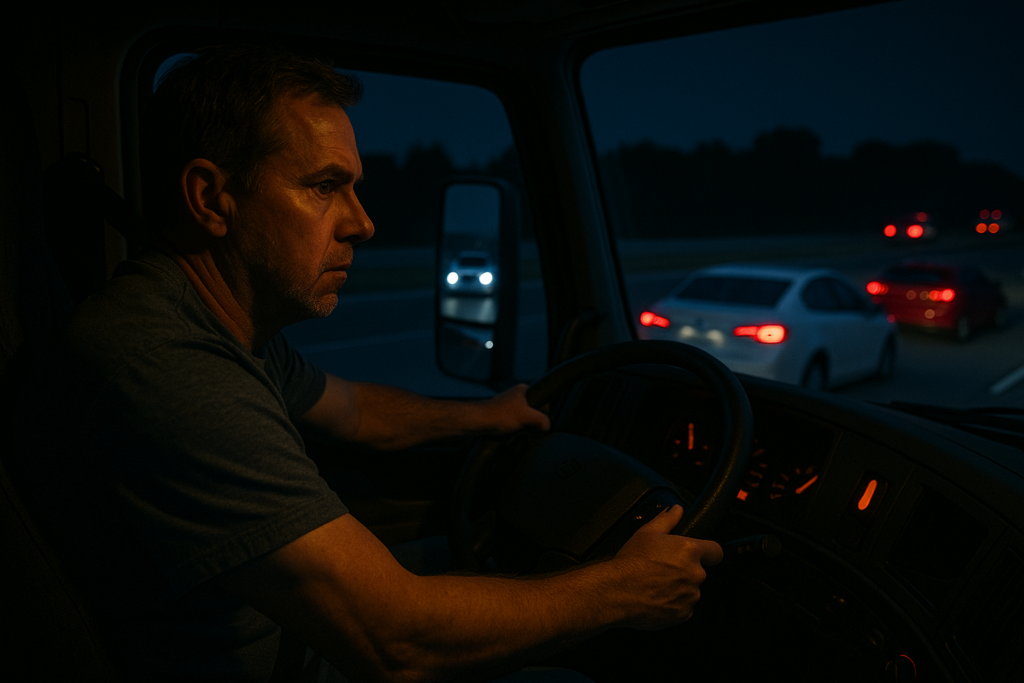
Blind spots act differently during the night. Light reflections, glare, and diminished depth perception distort distance. Due to the dark, passenger cars might stay in the blind spot longer as they feel safer passing the trucks undetected.
Aggressive driving moves up a notch when it is dark out, especially from non-commercial drivers who underestimate truck stopping distance. OTR drivers must always remember that they are often mistaken in their judgment that less traffic means less risk.
The most typical blind spot errors at night that truck drivers do are:
- Late checking of the mirrors before the lane changes
- Underestimating the distance with fast-approaching vehicles
- Moving to the right too early after passing
- Assuming that cars can see the turn signals immediately
Truck safety during the night requires exaggerated caution, not relaxed standards.
Not Adapting Driving Strategies to the Core of the Problem
The last error is not felt easily but it has a significant impact: it is treating the driving in the night the same way as in the day. The mind that is more active must take a different pace for night driving.
Adjustments that reduce OTR mistakes are:
- Expanding the following distance
- Cutting down on speed in lighting poor conditions
- Scanning further ahead for reflective cues
- Planning breaks earlier than scheduled
- Accepting lower mileage for higher safety
Avoiding mistakes is not about perfection; it is about adaptability. Drivers, who adapt their strategy, reduce the risk of accidents even in imperfect conditions.
How Night OTR Mistakes Lead to Crashes
| Mistake Category | Risk Outcome | Accident Type |
| Fatigue | Delayed reaction | Rear-end collisions |
| Speeding | Reduced stopping distance | Loss of control |
| Poor parking | Unexpected obstacles | Sideswipes |
| Skipped inspections | Visibility failure | Night impacts |
| Distracted driving | Missed hazards | Lane departure |
| Blind spot errors | Misjudged clearance | Side collisions |
| Strategy failure | Overconfidence | Multi-factor crashes |
Through this table, it is easier to see how unimportant decisions made at nighttime transform into serious commercial trucking accidents.
Novice vs Seasoned Drivers: Different Errors, Same Hazards

New truck driver errors tend to be overconfident in their own strength and underestimate their night fatigue. On the other hand, veterans sometimes hesitate to be fully aware of their surroundings, depending on habitual actions instead. They both are put at risk by the same laws of physics and they also face the same consequences. Avoiding mistakes is a continuous skill, rather than a milestone.
Practical But Sound Tips for Safer Night Interstate Driving
- Ensure complete pre-trip with the help of a flashlight
- Before fatigue becomes overwhelming, set up parking targets
- Be proactive in lowering speed limits
- Restrict distractions to a minimum, inside the cab
- Reassess blind spots more regularly
- Consider fatigue an issue of safety, not as a sign of weakness
- Prioritize rest over miles when your judgment is uncertain
Final Words on Night OTR Safety
The night time driving on interstates will always be an integral and inseparable part of the trucking industry. The roads will continue to be dark, the freights will not cease to move, and the pressure to perform well will always be there. The difference is all about the decision the drivers make concerning their risks.
Most of the OTR mistakes do not sound as though they are serious. In fact, they are quiet, incremental, and preventable. It is not all that alert to the thought of fatigue, speeding, and parking decisions overtly present themselves as dangerous. They just wait for a moment when they get you.
Truck safety at night is a product of knowledge, restraint, and preparation. A driver who respects the night conditions will not only protect himself but will also do the same for the other drivers who share the interstate with him. In the context of night interstate operations, many of these risks stem from drowsy driving, overlooked rookie truck driver mistakes, and the false belief that experience alone prevents errors. In reality, avoiding mistakes at night depends on consistent habits, situational awareness, and respect for truck safety principles that define trucking industry safety across long-haul operations.