
The reality of stress during the onboarding process
The initiation of a new driving occupation is hardly ever accompanied by discomfort due to a failure in skills. The majority of the CDLs that are beginning their journey in a new company and a new job have already a good knowledge of how to operate the truck, observe safety procedures, and interact with dispatchers. The actual discouragement of the opening period is caused by adaptation during the onboarding process. A program shift, new and unexpected requirements, unfamiliar roads, different ways of communication, and a persistent desire to gain trust all work together in creating a transition period which adds up to the workplace stress that builds in each day stealthily.
Common sources of workplace stress during the onboarding process
- program shift and new requirements
- unfamiliar roads and routes
- different ways of communication
- persistent desire to gain trust
- adjusting to change within a new company
Why the first 90 days shape long-term well-being
Driving a truck is a process that is typically not totally plagued by stress. It is stress that is built over time. The process of welcoming new drivers is period during which the drivers are being introduced to a significant amount of information, new processes, and some un-itemized restrictions. There are expectations that the personnel will learn and change quickly while continuing to observe the codes on performance, safety, and professionalism. If the drivers do not have a clear anti-stress plan and stress management routine, the initial three months and first 90 days will seem like a mental drain even if the job itself is manageable.
When structure is missing in the early stage
What happens when stress is not structured in the first 90 days
| Missing element | Practical consequence |
| No clear routine | Mental drain |
| No stress management | Increased anxiety |
| No structure | Cognitive overload |
| No recovery habits | Early fatigue |
This is the reason that the first 90 days are of paramount importance. They are the evidences for mental health, job satisfaction, and even long-term well-being. A basic anti-stress routine and daily routine can be implemented early as a 90-day plan to prevent the risk of burnout, lower anxiety, support anxiety reduction and stress reduction, and construct a solid stage for the new, most demanding phase of the trucking job.
RS86: How Can Onboarding Processes Help Retain Drivers?
Uncertainty as the primary stress trigger

The pressure in truck driving usually comes from not knowing what to expect instead of workload. Drivers new in the company or drivers who switch companies are adjusting to change and often have no idea about dispatch procedures, new kinds of freight, and what is expected of them. This ignorance initiates brain activity: “Am I right?” “Am I behind?” “Is that current?” The mind you need to do the work, when you don’t have the right structure, it stays in problem resolution, and this leads to exhaustion.
Typical mental questions during the transition period
- “Am I right?”
- “Am I behind?”
- “Is that current?”
- “What is expected of me?”
The role of routine in stress management
The anti-stress processes that are productive do not take away the challenges. They make the workplace predictable where it is possible, and they equip the team with skills to cope with tension where there is uncertainty. Switching from living on the road to mental health and emotional wellness in the first three months should not be so much about relaxation methods but more about implementing a successful routine that helps with the right decision-making.
The first step is realizing that the truck driving stress relief should be in accordance with real-life situations. The drivers cannot spare an hour to meditate between loads or adhere to a strict wellness plan. A relatable, practical, and relaxed stress routine should be laid and it should perfectly accompany long hours, changing schedules, and driving on the road.
Performance pressure versus adaptation
During the first days of the stage, the aim should be fixing things not maximizing them. The drivers are changing routines, experiencing new things, and they are finding their rhythm during the transition period. Trying to operate a top notch performance from the very beginning often results in a high burden for the workplace. The key for the driver should be following the plan with ease, not the magnitude of the effort.
Priority focus during the introductory 90-day period
Table B: Priority focus during the introductory 90-day period
| Focus area | Priority level |
| Fixing routines | High |
| Learning expectations | High |
| Managing stress | High |
| Maximizing performance | Low |
Cognitive overload and boundaries
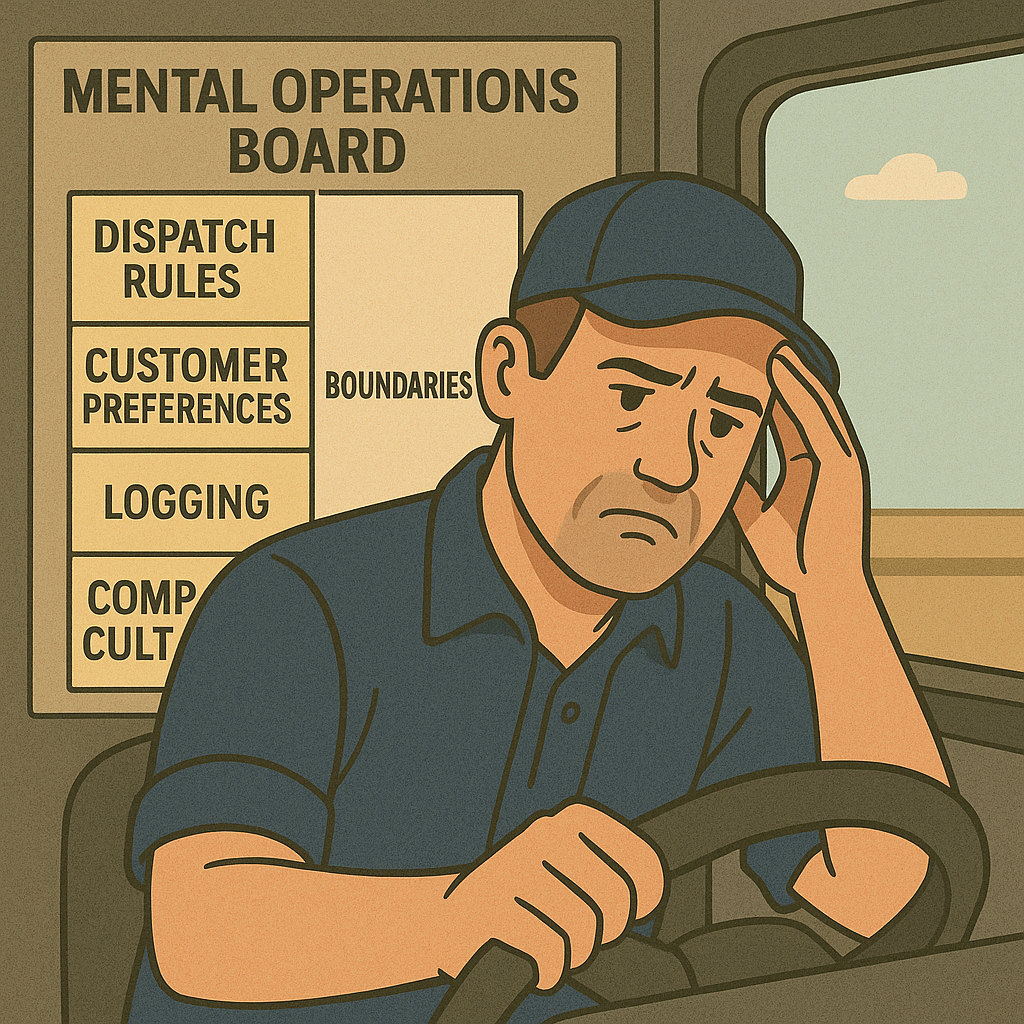
One of the most underrated stressors with a new position is having an obligation to learn everything at once. The new dispatch rules, customer preferences, logging expectations, and company culture come all together at the same time. Without any limits or boundaries, drivers are inadvertently burdening themselves with all these issues daily. The anti-stress plan is the one that takes capacity off your mental Operations Board. Issues concerning work stay at work. Even if they are short, intentional recovery times are now seen in a different light as part of stress management.
Daily routines as stabilizers
Daily routines play an essential role in the healing of anxiety. Small, easy to perceive actions structure the day and take away the cognitive load. Predictability exerts a braking effect on the thought process. For truck drivers, a daily routine does not require a big structure. The only condition is that it should be trustworthy and realistic for the first three months.
Elements of a trustworthy daily routine
- reviewing the plan for the day
- checking messages in a calm demeanor
- changing the cab environment
- maintaining predictability
Morning reset and emotional regulation
A simple morning reset, even ten minutes, can help to regulate the stress hormones. This may include reviewing the plan for the day, checking messages in a calm demeanor, and changing the cab environment. A clean and organized cab may lessen the visual stress thus improving the driver’s attention. These factors seem small but they do have a deep influence on the drivers’ emotions during long shifts and emotional wellness.
End-of-day decompression
The end of the workday is equally as important. The brain is still in work mode without a closing routine. Drivers are sometimes seen carrying dispatch conversations, delays, and frustrations into free time. A mini-break stretch, walk, or just sitting still without any screens will help the nervous system to understand that the workday is over. This boundary is critical for the mental state in the hiring process.
Common stress patterns during early employment
Table 1: Typical stress triggers observed in the first 90 days of truck driving
| Stress trigger | Common effect |
| Unclear expectations | Anxiety and overthinking |
| New dispatch patterns | Loss of control |
| Schedule changes | Sleep disruption |
| Performance pressure | Mental fatigue |
| Lack of routine | Emotional instability |
Realistic goals and emotional balance
Another part that strikes quite essential for stress reduction is having realistic goals. Most drivers are determined to achieve perfect performance as they enter a new job. While maintaining professionalism is crucially important, perfectionism makes you stressed. The learning of a new work in the first three months comes with mistakes. Drivers who have the freedom to be done in their own time, find it easier to cope with stress and adapt while building healthy habits.
Communication as a stress buffer

The other significant factor in communication models is stress management. Questions left unanswered often become mental loads. Drivers, rather than guessing, should better ask for clarifications beforehand. Accurate communication diminishes doubt and solidifies the bond with dispatch. Trust, once given, has a significant power in decreasing stress every day and supports a stress-free start.
Physical habits and nervous system stability
Physical activity has a key role to play not only in emotional wellness but also in the overall wellness. Eating irregular meals, lacking water, and having insufficient sleep all lead to excessive stress. The right anti-stress program should contain easy habits such as, drinking water on a regular basis, having meals that you can plan and getting enough sleep. These habits will keep you energetic and manageable.
Sleep adaptation in the first three months
Sleep is very important for the first 90 days. New schedules frequently disrupt circadian rhythms which may in turn cause difficulties for the drivers in terms of sleeping. Routines, rather than challenging the body, need to be adaptive. Having a steady pre-sleep routine, less screen time before sleep, and controlling the light exposure will help the sleep quality and reduce anxiety.
Table 2: Core elements of an effective anti-stress routine for truck drivers
| Routine element | Primary benefit |
| Morning planning | Reduced uncertainty |
| Cab organization | Improved focus |
| Hydration habits | Better emotional regulation |
| End-of-day decompression | Anxiety reduction |
| Sleep consistency | Mental recovery |
Mindset during the adaptation phase

Stress relief is also a product of mindset. If an individual sees the first 90 days as a learning period and not a performance test then the internal pressure is lessened. This type of view helps one to remain balanced emotionally and staves off the danger of burnout. If drivers view the time in the workplace as a temporary adaptation, they undergo less fight.
Managing external stimuli
Another important aspect is remote acclimatization without any unnecessary stimuli. Consuming news 24/7, social media, or background noise can overwhelm the nervous system. Quiet moments during the day can help reset attention and promote reduction of mental overload. Even short minutes of silence during breaks can be effective in lowering stress.
Weekly reflection as a stabilizing habit
The anti-stress routine should also include weekly reflection. Once a week, the riders abs from looking at what they have done right, what stressed them out, and what they accomplished. This reflection creates a sense of progress. The accomplishment of perception is a powerful buffer of stress during times of change.
Table 3: Weekly self-check questions during the first three months
| Question | Reflection goal |
| What improved this week? | Reinforces progress |
| What caused the most stress? | Identifies patterns |
| What routine helped most? | Strengthens habits |
| What can be simplified? | Reduces overload |
FAQ
1. Why is social grounding important during the transition period?
Social connections, even if minimum, help mental health. A brief discuss with family or trusted peers restores emotional grounding. The connection during the transition period adds to family stability and reminds drivers as to why the change is important.
2. Why is stress management considered a professional skill in trucking?
It should be noted that stress management is not weakness. In the trucking world, the ignorance of stress often brings about tiredness, blunders, and disconnection. An anti-stress routine is a professional tool, not a personal indulgence. Well-managed drivers are more efficient, clearer in communication, and flourish well over the long term.
3. What changes after the first three months of adaptation?
By the end of the first three months, the tasks have become routine. The responses of the body to stress are dulled. The self-confidence is raised. The drivers who undertook the anti-stress measures from the very outset are entering this new stage of their work with stability instead of fatigue.
4. What is the focus when building conditions for long-term performance?
The focus during the initial three months is not on wiping off stress. Rather it is creating conditions where stress does not turn into an all-time issue. A steady routine is a way to promote mental health, emotional well-being, and performance that lasts well. The trucking industry is where change is a given, and the skills to manage stress are as important as understanding the right routes.
5. Why is a calm start viewed as a long-term investment?
A calm start is not a result of mere chance; it is the product of habitual small actions that fortify well-being through the adaptation period. The truck drivers who conform to a disciplined, yet, well thought out, anti-stress routine during the first 90 days will not only benefit from lowered anxiety but also will have the benefit of creating a strong foundation for a long and healthy trucking career.