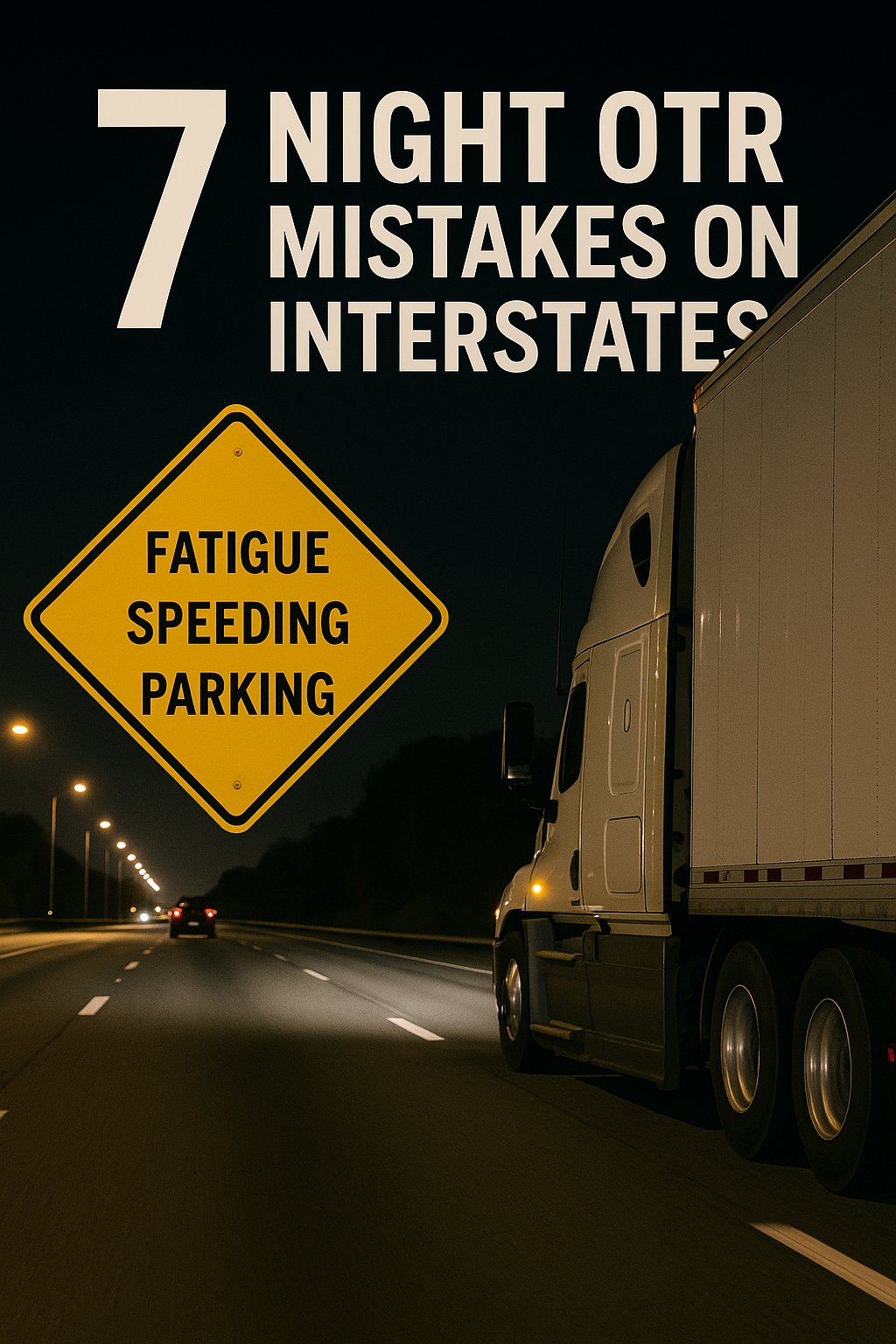
Over-the-Road (OTR) trucking has always been recognized as one of the highest-paid jobs, endless roads and the perception of “you got to earn it” in the industry. For many holders of a CDL license, OTR is the first major step of a trucking career. However, is OTR trucking truly a good deal for the money when one has to consider factors like lifestyle, exhaustion, and long-term sustainability?
This article gives a detailed analysis of OTR earnings, truck driver salary expectations, driver lifestyle realities, and how OTR compares to other truck driving jobs. No exaggeration, no recruitment language — just a straightforward comparison based on how long-haul trucking operates in reality.
In the trucking industry, long haul freight hauling remains closely tied to truck driver pay models, per mile rate structures, and overall driver earnings.
What Is OTR Trucking in Practical Terms?
OTR trucking, or Over-the-Road trucking, is a term that refers to the long-haul freight driving that usually keeps a driver out of home for numerous weeks. The routes mostly involve crossing many states, sometimes from one state to another, from east to west. The loads may be different, mostly depending on the carrier.
An OTR truck driver typically:
- Spends 2–4 weeks on the road at a time
- Lives mainly in the truck
- Is compensated thru the mileage rate, or a mileage-based structure
- Acts based on the schedules, the weather, and the road traffic
OTR jobs are the most common entrance for new drivers, but they are also occupied by experienced owner operators’ and teams in pursuit of better pay.
🤠 What is OTR truck driving? The guide to advantages and disadvantages of long-haul driving.
Driver’s Reason for Trucking OTR: The Cash Option
Drivers’ primary consideration for OTR trucking is the earning potential. For a long-haul driver, OTR is mostly higher than local drivers or some regional section due to the long distances and the most available consistent freight.
Common OTR Income Structure
- Per mile rate (company driver): generally higher than local jobs
- Weekly pay: based on the total miles driven
- Annual salary: directly affected by consistency and downtime
- Bonuses: safety, performance, or mileage-based
However, a higher gross pay does not indicate a higher driver salary after the consideration of lifestyle costs, fatigue, and unpaid time.
OTR Truck Driver Salary: The Real Look of the Numbers

For a long-haul truck driver or heavy-duty truck driver, annual salary outcomes depend not only on miles driven, but also on downtime, freight type, and consistency.
OTR earnings fluctuate greatly depending on many factors, including work experience, the company, freight type, and driving style. Here’s a realistic example of a truck driver salary range distribution.
OTR Truck Driver Pay Overview
| Driver Type | Weekly Pay (Gross) | Annual Salary Range |
| Entry-level OTR company driver | $900–$1,200 | $45,000–$60,000 |
| Experienced OTR company driver | $1,300–$1,700 | $65,000–$85,000 |
| Team driving (per driver) | $1,600–$2,200 | $80,000–$110,000 |
| Owner operator (OTR) | $2,500–$4,500* | $130,000–$220,000* |
*Owner operator figures represent gross revenue before expenses.
This table answers why OTR looks financially attractive, especially the beginning of carrier truck driving. But figures don’t disclose everything.
What They Don’t Tell You: The OTR Driver Lifestyle
The greatest downside to OTR trucking is lifestyle. Long-haul trucking needs more than driving skills; it demands adaptation both physically and mentally.
The Common Lifestyle Realities of OTR
- The time spent away from family members is prolonged
- Sleep schedules are uncommon
- The access to healthy meals is limited
- Driving is mostly socially isolating
- Decisions must be made rapidly, resulting in a heavy mental load
For some drivers, these living conditions are tolerable or even good. Others, however, experience this lifestyle as a burden and eventually quit even with satisfactory payment.
Long-Haul vs Other Truck Driving Jobs

This section serves as a practical job comparison between OTR trucking and other common truck driving roles.To figure it out if the OTR is fair or not, it has to be compared with other alternatives of truck driving.
OTR vs Other Trucking Jobs
| Job Type | Home Time | Income Potential | Lifestyle Stress |
| OTR trucking | Low | High | High |
| Regional | Medium | Medium–High | Medium |
| Local | High | Medium | Low |
| Dedicated | High | Medium–High | Low–Medium |
OTR leads directly in earnings potential but struggles in time away from home and lifestyle stability.
TAO on OTR vs Regional
Many drivers begin with OTR and later transition to regional routes. What for? For instance:
- Regional often means you get a week at home
- Pay ends up being similar considering that you get paid for the time you are not driving on unpaid OTR downtime
- Less fatigue leads to better performance
For drivers who care about having balance in life, regional trucking is a smart decision after gaining valuable experience.
Owner Operator’s View on OTR: Still the Question if It IS?
For an owner operator, yes – OTR trucking if done right is good but with self-discipline.
Perks for Owner Operators
- Nationwide access to freight
- Per mileage revenue at the top
- Choice of the load
Missing
- Fuel, maintenance, and insurance
- Long-haul schedules that leave you more tired
- Increased risk
OTR is for the owner operators with the business mindset, not just a job as a driver.
Team Driving: Making Money Out of OTR
Team driving promotes the most, as the fastest way to achieve higher income from OTR.
Why Teams Earn More
- Trucks constantly move
- Weekly mileage increases
- Higher freight rates
Drawbacks
- Shared space
- Limited down time for oneself
- Conflict of interests
Team driving can significantly increase driver profits, but it is not for everyone.
Specialized Freight: Better OTR for a Smarter Path?
Some drivers continue OTR but switch to specialized freight.
Examples include:
- Temperature-controlled freight
- Flatbed and heavy-duty hauling
- Hazardous materials
These jobs frequently offer:
- Higher rates per mile
- Superior equipment
- More predictable pay
Specialized freight can make OTR financially better without prolonging the time on the road.
Weekly Pay vs Annual Salary: What Drivers Overlook
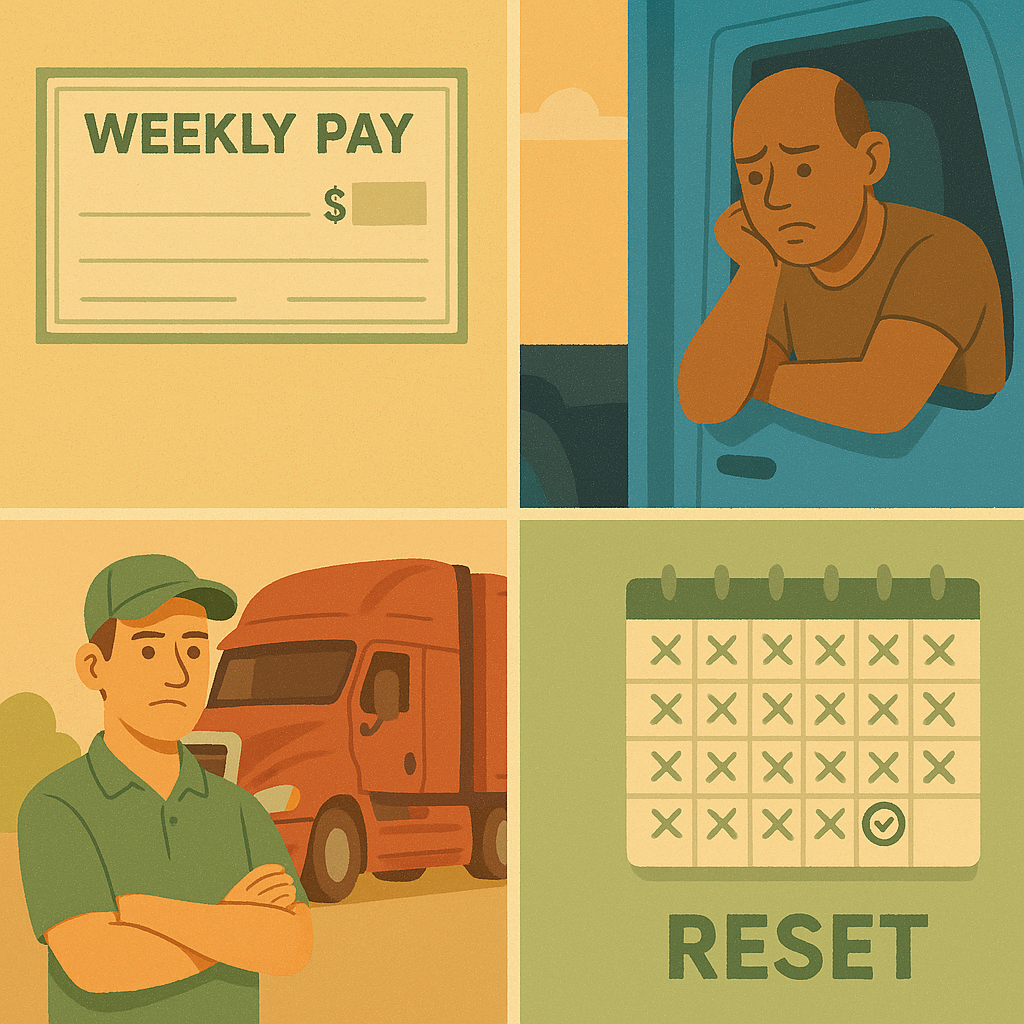
Many drivers focus on weekly pay but overlook the value of consistency.
High-paying weeks mean little if they are followed by:
- Long waits for loads
- Equipment downtime
- Forced resets
OTR income stability relies on:
- Route planning
- Time management
- Fatigue control
Weekly OTR shop drivers looking after the business which, in turn, pays them more at the end of the year.
Should OTR Be ? for New Drivers?
For new CDL licenses holders, often it is a good step to take OTR trucking as the starting point.
Perks for Beginners
- Getting a job is easy
- Time to build experience is short
- Interacting with different freight and joined together regions
Risks involved
- Burnout
- Poor work-life balance
- Unrealistic income expectations
OTR is a phase that every driver should view, not a permanent state for all drivers.
Who OTR Trucking Should Be Best For
OTR for you makes sense if you:
- Firstly, you prefer to earn money than stay at home
- Secondly, you are at the first stage of your trucking career
- Thirdly, you plan to switch to better roles later
- Fourthly, you are able to meet the long-haul lifestyle requirements
OTR may not apply if you:
- Consider daily or weekly home time crucial
- Sleep irregularity is a problem for you
- You would rather have stable over flexible
Table 3: When OTR Is (and Isn’t) Worth It
| Driver Priority | OTR Fit |
| Maximum income potential | ✅ |
| Career entry and experience | ✅ |
| Work-life balance | ❌ |
| Long-term sustainability | ⚠️ |
| Family-focused lifestyle | ❌ |
Long-Haul Truck Driver Reality: How Long Haul Actually Shapes Earnings

When our thoughts turn to long-haul trucking, we often regard it as driving endless routes and generating constant revenue. However, freight long haulers are actually forced into a compromise between their driving, waiting, and operation time that directly influence their earnings.
A long-haul truck operator earns not merely for the time at the wheel but the time when the wheels are on the move. Detention at shippers, meteorological delays, traffic congestion, and mandatory zeros are effective cut the paid time of drivers. This is exactly why two drivers going through common long-haul routes are able to finish the year with quite different annual earnings.
The per-mile rate is the main premise of the long-haul truck driver payment system; however, the amount of actual income depends primarily on the effective conversion of miles to paid weeks throughout the year. In long-haul operation consistency is sometimes more important than the front page rates.
Truck Driver Pay in Long-Haul Operations: Beyond the Rate Per Mile
Truck driver remuneration in long-haul transportation is very much governed by the per-mile basis, but this is just one element of the total income puzzle. Even a very attractive rate per mile might not be enough if the freight operation incurs damage due to driver downtime or poor dispatch timing.
Some of the determining factors that keep long-haul truck driver income on track are:
- How many times the freight is overall rolled into a pre-plan as opposed to the last-minute one
- The tally of forced resets that are issued during long-haul runs
- Transit period so-called “load-to-load”
- Equipment durability over the greater distances
In the trucking business, truck drivers that term-lection make use of long-haul trucking as a transfer orchestration and not a dash courting a system of order treat bad long-haul driving as a system contraction under a freight cycle that sometimes helps save them money. Thus their paycheck doesn’t come up just from blindly crawling the miles but from the absence of the time freight cycles must have spent unpaid.
Job Comparison Inside the Trucking Industry: Where Long Haul Really Stands
Long haul has been the benchmark income potential role in the trucking industry, associations notwithstanding. A clear job analysis reveals that while long haul performs the dominant role in source income, other segments are often superior to it in benchmarking shares.
Long haul drivers who are preoccupied with maximum salary nationwide would moonwalk with long haul, which still remains the ultimate ticket. However, drivers drawn to equilibrium or long-term well-being typically discover better integration outside the all-OTS model.
This internal worker comparison justifies the owing of transitory long-haul driver, team driver and regional operator across their careers deployments rather than entirely sticking to a particular lane for good.
Team Driving vs Solo Long Haul: Earnings Versus Endurance

Team driving is frequently regarded as an income lifting mechanism within HH trucking. Ultimately when comparing figures this is true: team operations will be a maximized truck utilization and improved weekly driver earnings.
Conversely, team driving alters long haul work procedures. Whereas the truck driver profession is experiencing pay growth, the endurance factor actually becomes the trade-off. Common sleep cycles, decreased personal time and constant motion all require deep compatibility from both truck drivers.
As a matter of fact, in long-haul trucking, team driving works out as a determined phase, which serves to shove earnings in the fast but is not a standard long-term solution.
Long-Term Annual Salary Perspective for OTR Drivers
Long-haul truck drivers’ annual salary is seldom linear. Good weeks are normally compensated for by bad ones, so, the drivers that excel financially are those who get this tempo very early.
Top-notch long-haul drivers are involved in:
- Balancing fatigue to avoid mandatory break time
- Choosing viable lanes for durability freight
- Distributing per-mile rate with realistic weekly capacity
This will even out driver earnings at the end of the year despite these weeks when earnings wax and wane.
Final Verdict: Does OTR Quite Live Up to the Image for the Money?
Income in OTR trucking can be well worth it under the reality viewing.
The advantages include:
- Access to nationwide freight
- Higher earning potential
- Fast career entry
Although you pay with:
- Time
- Energy
- Lifestyle discomfort
For many truck drivers, OTR is not their final stop. It is a means to an end – a life lesson, a tool for building income, and a lever to move to better jobs.
The majority of successful trucking OTR drivers are not those who stay on road the longest, but those who know when OTR pays off and when it is time to quit.