Mountain driving is not just a matter of plotting a different distance on a map to create a route. A mountain segment leaves a completely different imprint on the behavior of the car; the driver has to adapt accordingly, and a tiny mistake can lead to a severe risk. Likewise, in the case of a mountain road trip, planned beforehand, a commercial haul across mountain lengths, or the traverse of a mountain range as a detour, mountain planning is the safety procedure one cannot afford to skip.
Flatland driving tips are not useful when it comes to high-altitude driving. Other forces are at play, such as higher changing gravity, quicker climatic change, and a braking system that takes more stress than elsewhere. The plan for a mountain section addresses the uncertainties prior to the beginning of the climb but is not a plan for acting after meeting problems.
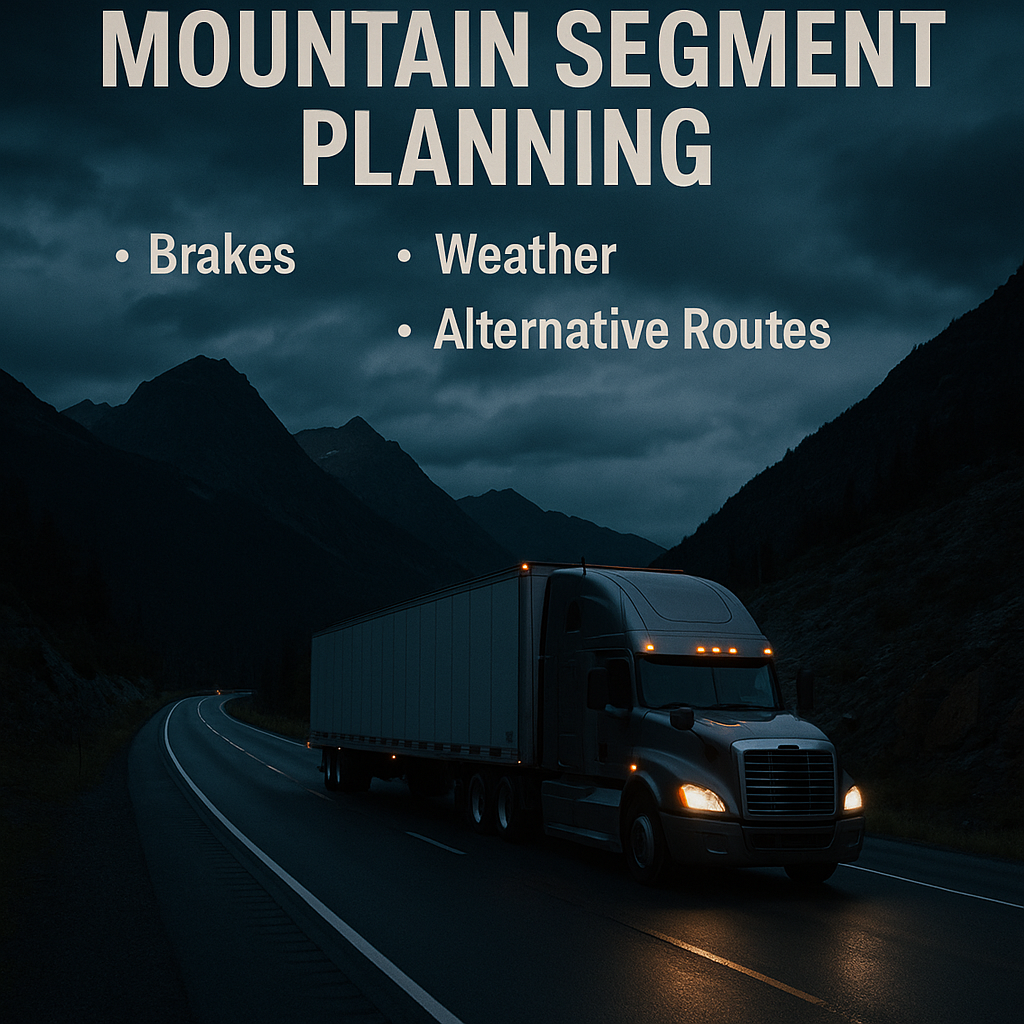
This article wants to help you with your mountain driving so the focus is going to be on three areas: vehicle brakes, weather conditions, and alternative routes. These three issues form the basis of a mechanism that will secure your equipment, time, and primarily human lives.
Why mountain segments require a different planning format
Indeed, mountain segments undoubtedly require a different planning format.
The mountain section sunken within the segment is a hazardous situation. Slopes steeply going down, lanes narrow to the width of a car, visibility severely impaired, and to top it all, no alleys to turn to make the segment becomes a death trap. A missed call on the weather such as predicting rain when the driver intended to brake late or driving too fast could result in dramatic loss of life on a decline.
Mountaineering is not fear-driven; it is the sequence of decisions preplanned. One should not want to go through a mountain segment but instead to be ready to do so.
The dominant characteristics distinguish mountain driving from other types like:
- Constant fluctuations in height
- Continuous brake load instead of short braking periods
- Quick weather transitions
- No extra room for shoulder
- Limited to no safe recovery areas
Identifying these differences is the first thing in a planning procedure that is safe. This is the very awareness that, when operating vehicles in high-risk mountain environments, proves to be the foundation of road safety.
Core risk differences in a mountain segment
| Segment Factor | Flat Terrain Impact | Mountain Segment Impact |
| Elevation | Minimal change | Constant altitude fluctuation |
| Braking | Short, intermittent use | Continuous heat load |
| Weather | Gradual changes | Rapid, unpredictable shifts |
| Recovery space | Wide shoulders | Little to none |
| Decision margin | High | Extremely limited |
Vehicle brakes: the main goal in mountain planning
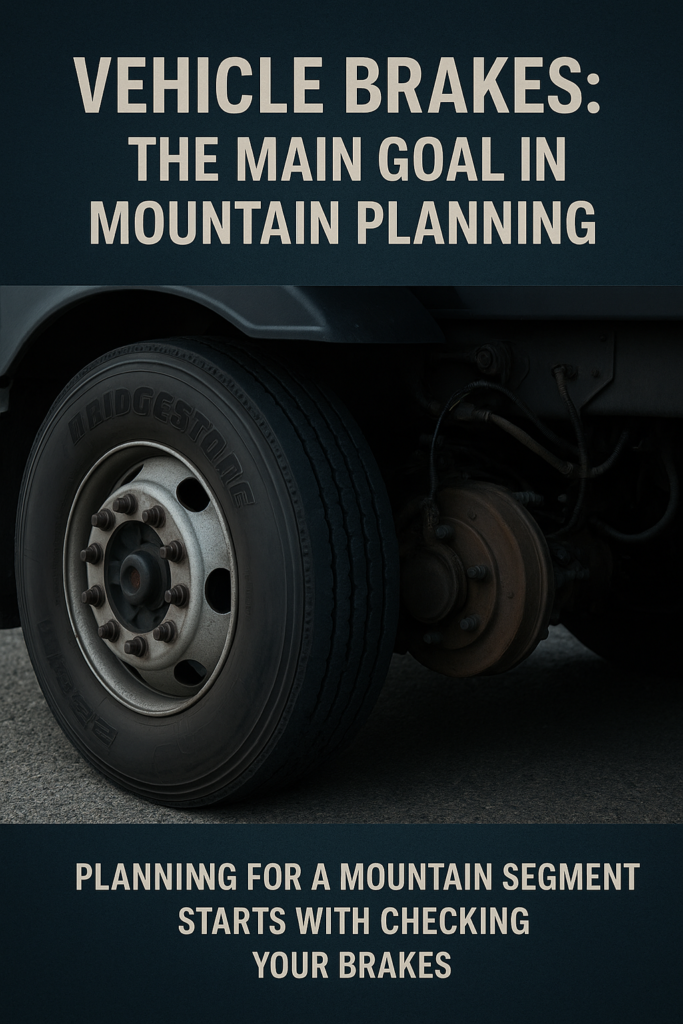
The braking system of the vehicle is the most used system while driving on a mountain. Going down a long hill brings the energy of the object from potential energy to heat, which indirectly affects the braking process. A braking unit that is in good condition on the flat may fail on a long incline.
Planning for a mountain segment starts with checking your brakes, which is more important than estimating your speed or arrival time.
How to Brake Downhill Safely | Air Brakes Smart
Brake checks prior to entering a mountain segment
Brake checks are not just a formality; they help as a gate. Before entering a mountain pathway, drivers have to identify:
- Brake response and pedal feel
- Absence of brake fade or delay
- Correct adjustment of trailer brakes
- Functionality of engine braking or retarder
- No warning indicators relating to braking systems
Regular brake checks before entering a mountain segment act as a preventive filter, eliminating any risks before the vehicle is subjected to backcountry road exposure.
A simple and easy rule to follow is that if brakes feel doubtful before the grade, they will be even worse in the descent.
Brake management during descent
Driving on downhill grades is a different ball game because you, instead of braking, have to control your speed all the time to avoid overheating.
Effective brake management consists of:
- Selecting a lower gear before descending
- Using engine braking as the primary speed control
- Applying brakes in short, firm intervals rather than riding them
- Avoiding late or panic braking
- Maintaining a speed that is an efficient one not a conservative one
These practices serve as helpful driving tips that enable drivers to keep control without burdens over brake systems.
Brake checks are not mechanical only; they are behavioral. So discipline is the ultimate protector.
Weather: the most underrated variable
Weather indeed has a much greater role to play in mountain areas than is generally assumed by forecasters. It may be sunny at the bottom but, during the climb, it can turn into snow, fog, or icing rain. Mountain driving requires that weather is considered as dynamic risks, not stagnant forecasts.
When driving in bad weather conditions, it is not always possible to avoid it. However, it should not be taken by surprise. In high mountain areas, bad weather usually develops step-by-step rather than suddenly, which makes early detection a critical safety skill.
Weather risks specific to mountain segments
Mountain weather augments the challenge with:
- Quick and unpredictable cooling
- Loss of grip on curves shaded by trees
- High winds hanging on summits
- Scattered fog that hinders downhill visibility
- Ice forming even when air temperatures are above freezing
Plus high elevation also impacts the performance of the engine, brakes, and tires, these factors should be accounted for the planning of the route, not found out halfway down the hill.
Weather-based planning choices
Strategic planning should contain weather checkpoints:
- Elevation-related forecasts
- Identification of snow zones, chain requirements, and equipment needs
- Timing mountain entry to avoid peak weather shifts
- Willingness to delay entry instead of pushing forward
Weather is not an obstacle to defeat; it is a condition to be respected.
Alternative routes: the hidden layer of mountain safety
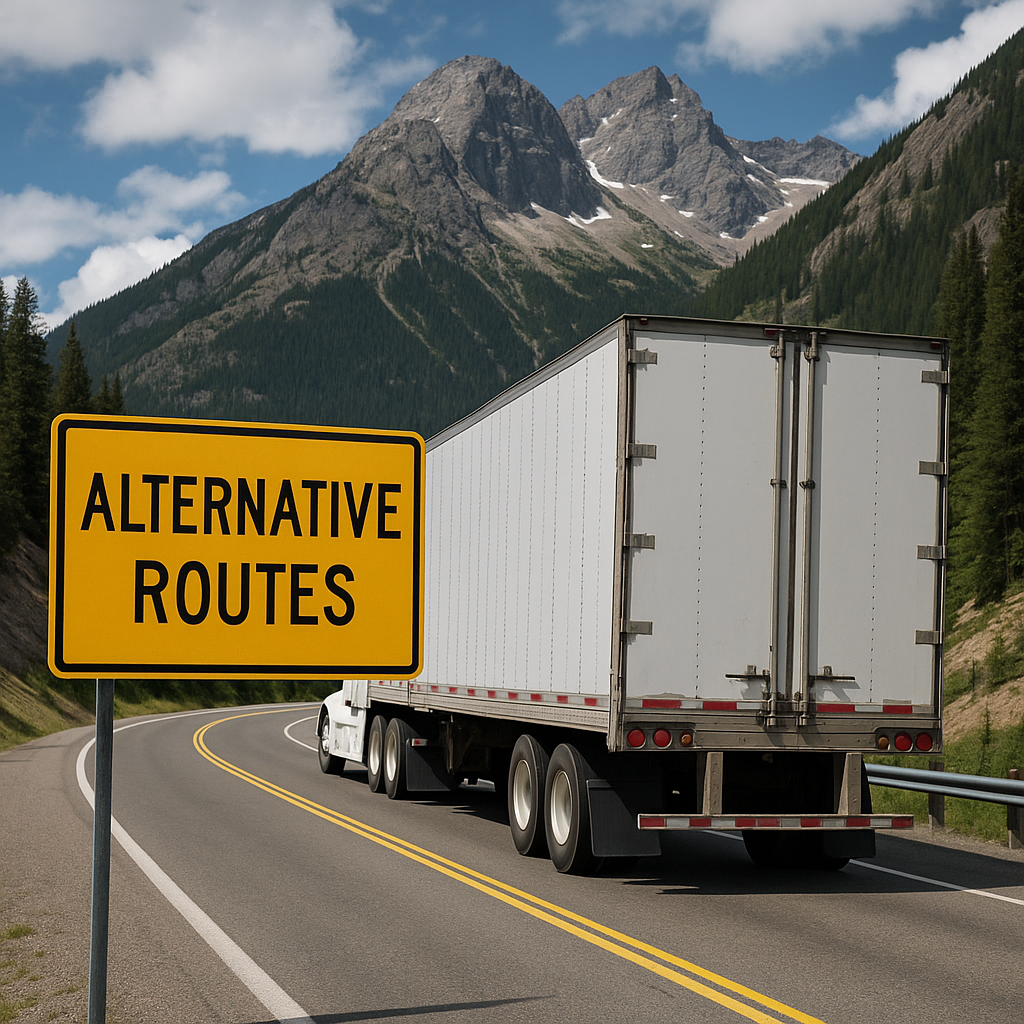
Alternative routes are often viewed as discretionary or as a last casualty. In mountain travel, they should be identified even before the primary route starts.
A mountain segment without an exit strategy is a losing situation.
Why alternative routes matter
Mountain roads can be blocked quite swiftly due to:
- Accidents that close narrow passes
- Sudden snowfall
- Wind restrictions
- Rockslides or debris
- Emergency safety closures
When a route section is shut in the middle, backtracking may not be a choice. The previously determined alternative and emergency routes can relieve stress and abstain from risky improv.
Identifying viable alternatives
Route planning must be effective and include:
- Alternative highways at lower elevations
- Staging areas before steep segments
- Safe off-road spaces for weather delays
- Exits for mechanical trouble
- Access to emergency services
Defined route alternatives provide flexibility while dealing with contingencies or unexpected closures.
Route alternatives should never be designed for utility; they are created for safety.
How brakes, weather, and routes work together
Almost all mountain driving problems are not caused by a single reason. Problems are produced when ensembles of systems encounter strain.
| Planning Element | Failure Risk | Consequence |
| Vehicle brakes | Overheating | Loss of stopping power |
| Weather conditions | Reduced traction | Loss of control |
| Route planning | No alternatives | Forced continuation |
| Driving procedure | Late decisions | Emergency maneuvers |
| Vehicle maintenance | Hidden defects | Mechanical failure |
These illustrations indicate that mountain planning has to be comprehensive, being a whole instead of a mere fragmented entity.
Vehicle maintenance as part of mountain preparation
Mountain segment planning starts far ahead of the journey.
Proactive vehicle maintenance defines how much margin for error exists before a mountain segment even begins.
From this perspective, mountain preparation becomes a core element of disciplined travel planning, not an isolated driving task.
Check-ups necessary prerequisite:
- Thickness of brake linings
- Quality of brake fluid
- Depth of tire tread
- Functionality of the cooling system
- Health of the retarder and transmission
Driving at high altitude exposes the vehicle’s problems more quickly. Maintenance is not a matter of being perfect; it is a matter of being predictable.
Driving checklist for mountain segments
A driving checklist turns your plan into action and helps you rely less on memory in stressful conditions.
Pre-mountain checklist:
- Confirm brake performance
- Review weather forecasts by elevation
- Identify alternative routes
- Adjust driving schedule if required
- Confirm emergency contact access
During mountain driving:
- Control speed early
- Monitor signs of brake overheating
- Increase following distance
- Avoid sudden steering inputs
- Maintain awareness of weather changes
Post-segment review:
- Check brake response
- Assess vehicle condition
- Document routing hazards for future planning
Checklists are the greatest tools to fight complacency.
Emergency routes and decision thresholds
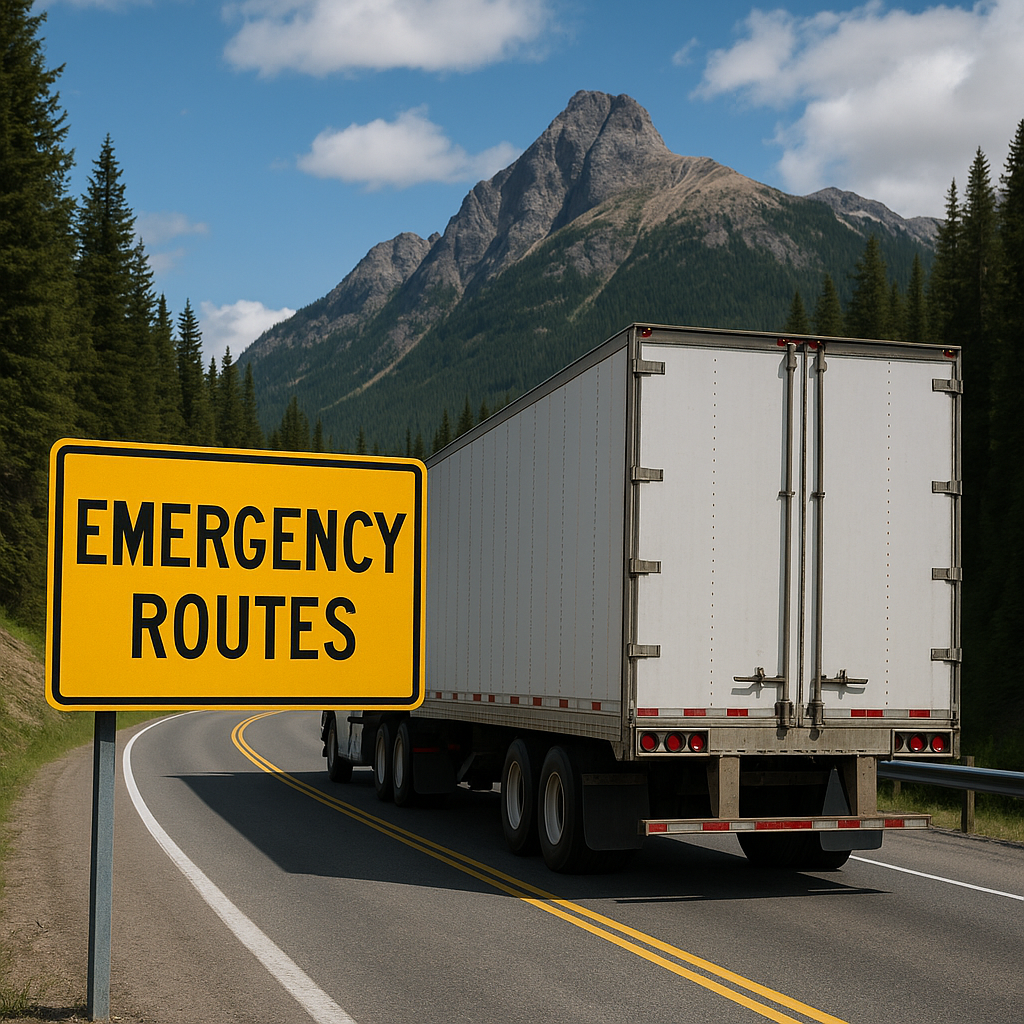
Emergency routes work only when drivers are predisposed to use them prior to the outbreak of panic. A plan must specify visible borders.
Common thresholds include:
- Speeding up despite braking
- Brake odor or fading feeling
- Visibility dropping below safe distance
- Loss of traction on curves
- Weather worsening faster than expected
Following thresholds are crossed, the safety limit for continuing is gone.
Mountain driving as a discipline, not a challenge
Driving mountain roads is not about testing skills but rather adopting restraint. Drivers who abide by the rules go out safely while those who test them often rely on luck.
Driving skills are not enough. Route planning, brake preparation, weather awareness, and route alternatives together create safety margins.
Road safety in mountain regions is preventive. It is avoiding needing to react rather than responding appropriately.
Final thoughts on mountain segment planning
The mountain segment planning procedure is not just a list of items to check; it is a mindset. It prioritizes brakes over speed, weather over schedules, and alternatives over assumptions.
Driving in the mountains will always have an element of risk. Thoughtful planning will switch that unknown risk to a situation that is controlled. Drivers who regard mountain sections as special powered sections will, therefore, safeguard their tools, time, and their lives.
In practice, the safest mountain driving decision is usually the one made before the first climb starts.
Mini FAQ
1. What is the specific requirement for planning in mountain driving?
Mountain driving is a high-risk activity due to the presence of steep grades, limited recovery space, and rapidly changing weather, which makes a dedicated driving procedure and prior planning a necessity rather than an option.
2. How much do brake checks mean for a mountain section?
Brake checks are of paramount importance in high altitude driving, as braking systems encounter sustained heat load, and the earlier a malfunction is detected, the lower the potential consequences during a mountain descent.
3. Why do we have to be careful about weather conditions in mountain areas?
The vertical displacement of air, increased wind speed, and decreasing temperatures add significant uncertainty. During high altitude driving, air mass stability can change rapidly while climbing or descending, directly affecting vehicle control.
4. Are serpentine routes needed, even if the main road is clear?
Yes. Mountain routes can close suddenly, and without proper route planning and predefined alternatives, drivers may be forced into dangerous or emergency actions.
5. Which is the most frequent fault committed by drivers on mountain parts?
A common mistake is treating mountain roads the same as flat ones, while road safety in mountain environments requires speed, braking behavior, and decision timing to be adjusted to allow room for error within the driving procedure.
6.Can a careful mountain plan be replaced by good vehicle maintenance?
Absolutely not. Vehicle maintenance supports safety, but the way systems are used under stress — such as braking and exposure to weather — depends primarily on planning, driving procedure, and route planning rather than maintenance alone.